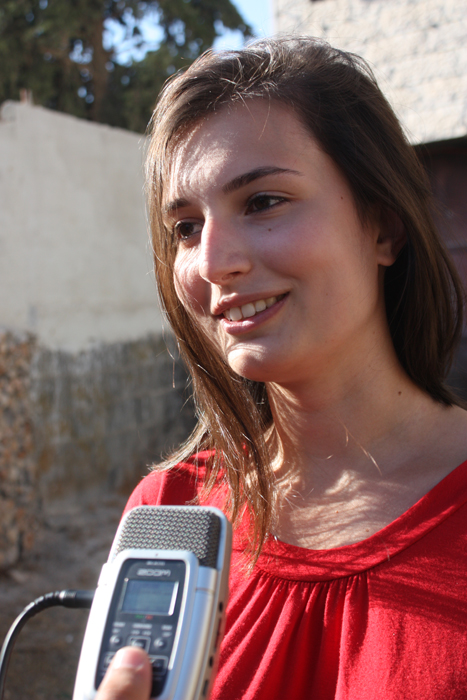
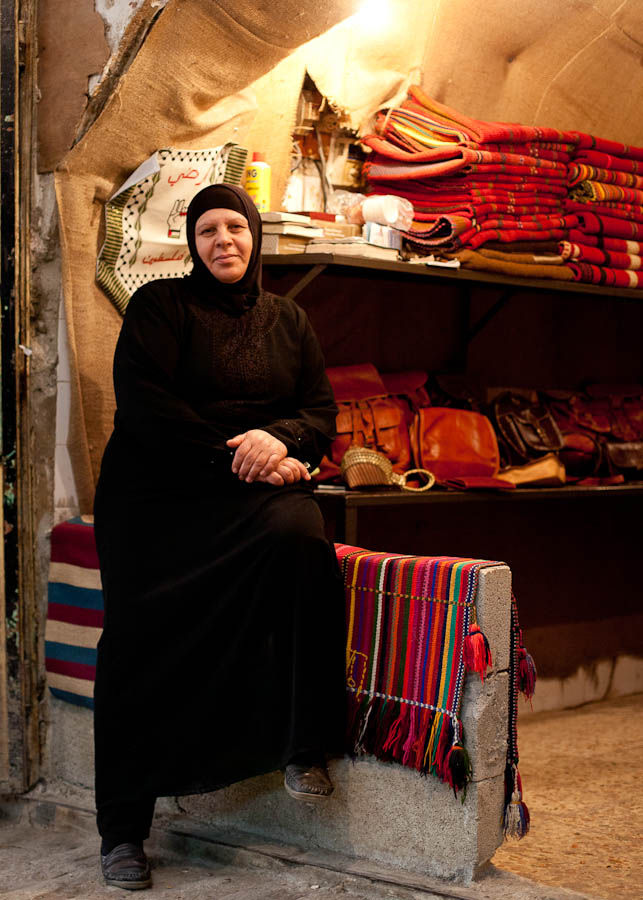
My name is Lucy Shomali , and I’m half Czech, half Palestinian.I come to Beit Sahour almost every summer to spend the holidays with my family. I am proud to claim my origin, but it is not easy to be the strange one wherever I go.
I try to help Palestine by sharing my experience, so here is my
story.
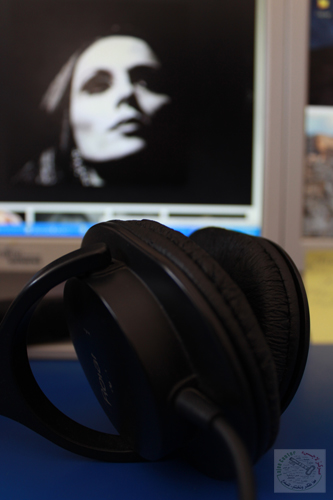
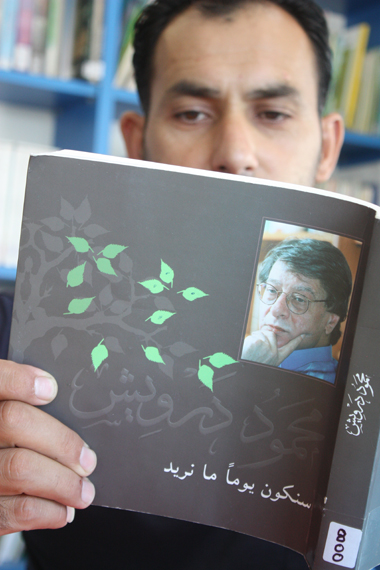
Mahmoud Darwish was a Palestinian poet who devoted his life fighting for human rights for Palestinians.He suffered much during his life for his commitment to this struggle, including exile and imprisonment. He is well known as the voice of the Palestinian people, but his poems are cherished by people from all over the world. Darwish passed away in August of 2008.This segment is written and narrated by seventeen year old Shatha Saleem who is originally from Beit Mahseer in Palestine, but now lives in Amman, Jordan.
Yasmine has been living in Aida Camp for a month, helping out at the Lajee Center and also playing football with the Women’s National Team. She is 18 years old and is on a gap year. She lives with her family in New York. In this piece she talks about her involvement with the national team and shares her thoughts on football in Palestine.
Embroidered dresses are an important part of Palestinian culture and history. Dating back to ancient history, women have been hand making beautiful dresses. Once an indicator of class and marital status, the dresses have now become a more symbolic costume to remember Palestinian culture and keep the tradition alive. In this piece, Sondos Nidal talks about this important handicraft and interviews her grandmother about the history of embroidered dresses.
Since the beginning of the Intifada, Palestinians with West Bank or Gaza Identity Cards have needed to obtain permits from the Israeli Intelligence in order to enter Jerusalem.Jerusalem, the capital of Palestine, has important prayer sites for Muslims, Christians, and Jews. In this clip, 15 year-old Rania Roomi, talks about dreams of one day being able to visit Jerusalem.
I have written this piece because I want everyone to know about Ghassan Kanfani. He put something in my heart and made me feel proud about being Palestinian.
Personal stories like this one are extremely difficult to tell, but the telling is very important. It’s taken a long time for Radio Lajee’s Mohammad Qassim to finish this post and it’s been well worth the wait.
Here in Palestine, coffee is a MAJOR part of our life. We drink it first thing in the morning, second thing in the morning, after lunch, whenever people come to visit, at work during meetings, to resolve disputes, at weddings, at funerals…Yep, we pretty much drink it all the time. In Syria, Jordan, Lebanon and Palestine, locals tend to drink a Turkish style of coffee made from a combination of brown and black beans and ground until extremely fine and soft.
When people from outside the Arab world come to visit us, they often develop a taste for this style of coffee but have difficulty making it themselves. We often get asked the same series of questions: how many spoons of coffee should I use? How long should I keep the coffee on the stove before it’s done? How do you keep it from overflowing and making a huge mess? Well now, thanks to Radio Lajee’s Layan Azzeh, all will be revealed in this cute, instructional video of hers. If you enjoy watching it and find it helpful, don’t forget to leave a comment for her below.
Here in Aida Camp and in fact most of the Arab world, Ramadan is a pivotal occasion which takes place for 30 days of every year. It’s the ninth month of the Islamic lunar calendar and historically commemorates the period when the first verses of the holy Qu’ran were revealed.
On a surface level, Ramadan is about fasting so if you’re in good health, adult and Muslim, you should refrain from eating or drinking anything during the daylight hours. When the sun sets, Muslims break the fast generally alongside their entire family.
On a deeper level, Ramadan is a time for spiritual advancement, self-improvement, generosity, empathy and community.
Like any significant religious occasion, some people love it, while others dread it. One thing’s for sure though, Ramadan certainly means something different to everyone.
To give you a better understanding of what these 30 days are about, Radio Lajee’s Shoroq Asad prepared this slide-show. If you like it, don’t forget to leave a comment and share with others!